
Small Adjustments Can Matter
They can matter a lot—especially early in the school year.


This post is coming out a day late and there are many, many reasons for that.
Unsurprisingly, the avalanche that is the opening of any school year is probably the best explanation. I won’t go into the laundry list of things just because my guess is any teacher reading this already knows the things and likely is in the midst of them, too. Toss in that our household is for the first time entering the school year with all four of us going to different schools each day—yes, it is quite something to officially be the parent of a kindergartener student now!—and avalanche, inevitably and perpetually, is an understatement.
Still, I continue to find joy daily in the classroom. Quite honestly, it has never been easier to think of small wins to add to my chart before I turn off the lights and dash out each day excited to try and learn how the day of kindergarten went.
As always, there is so much good to be found in the classroom.
And even amidst the avalanche and all else going on right now, I also find purposeful joy in reflecting on my own practices as a teacher—so I wanted to take time with this post to do just that: to share four small adjustments I’ve made this year that have thus far paid off and made our classroom better.
(Even if it’s a day late.)
⓵ Embedding “Challenge Scaffolds” Early/Often
I’ve written before about the importance of making sure that, when you are challenging students, you include tangible supports and pathways. Reflecting back on my own classroom in recent years, though, a lot of those “tangible supports and pathways” have tended to show up later in the school year.
In a way, this makes sense: you build the foundation first in a way that works for everyone and then help students move forward in different paths based on your understanding of what is best for them.
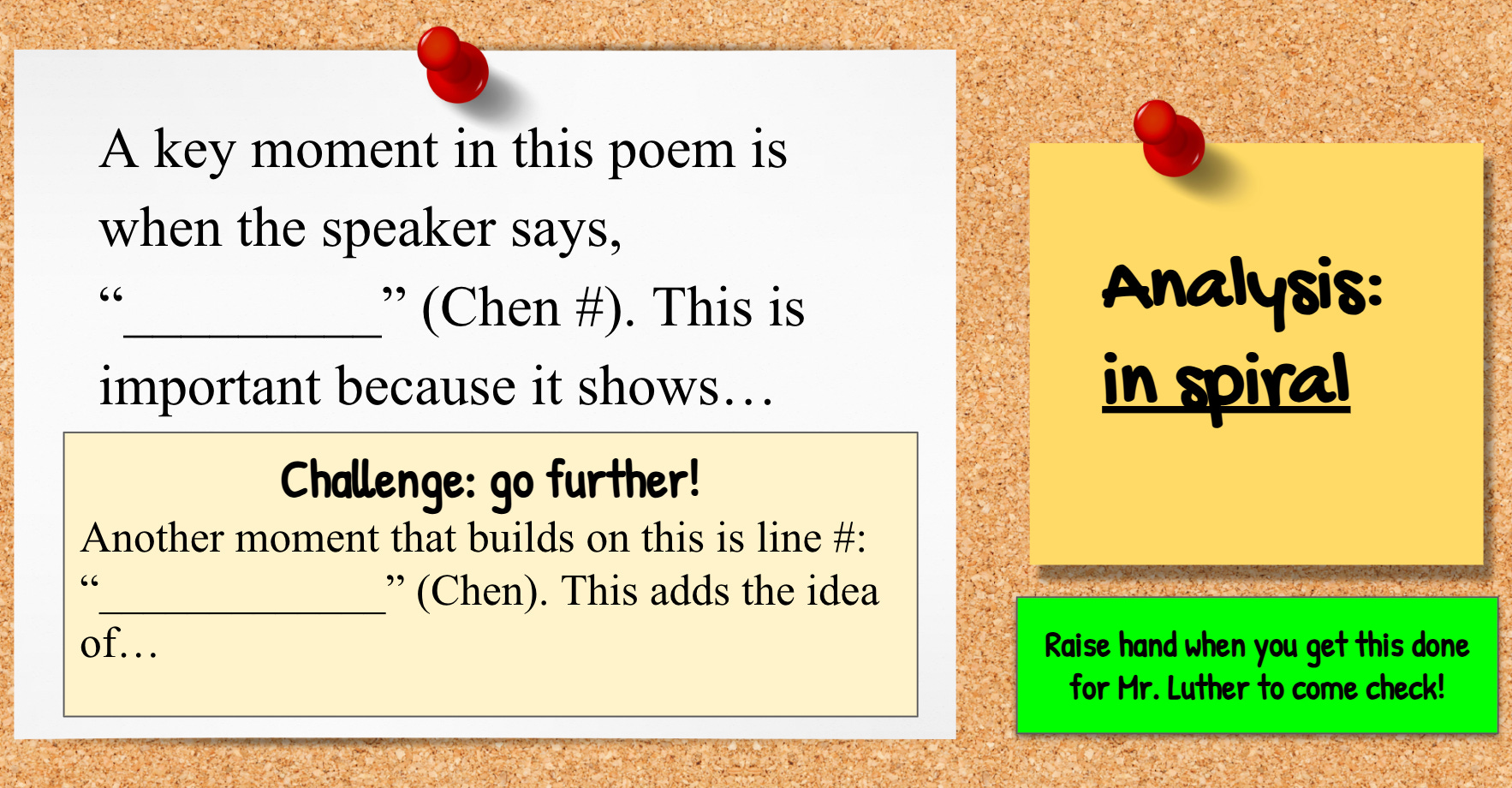
However, this year I’m trying to make sure to embed “challenge scaffolds” early and often, such as in the slide above from the 2nd week of the school year. In a closing writing task for student spiral notebooks in my sophomore English course, I had students capture their thinking with the poem we had just worked through with a key moment analysis—but I also included a “Challenge: go further!” scaffold for those who wanted to keep going.
The benefits of this small adjustment: Right away, I was able to see which students pursued this challenge—to my surprise, it was more than just a handful!—and, reflecting back, it was a great way to make sure that those students felt seen early on in our classroom. (I also think a direct line can be drawn between activities like this and the highest number of English 10 students in some time hitting the highest level of mastery on our first formative writing assessment.)
Admittedly, we do have an Honors-level English course at our school that these students could have taken instead of English 10. Yet in my eyes that does not mean for a second that these students don’t deserve to be seen and challenged within our classroom.
So getting to work on that right away substantively and successfully? Definitely a win.
⓶ Interlocking the Learning Across Lessons
When I’m thinking of how I want to begin lessons, I typically plan backwards from how the particular lesson ends. After all, this is what “good teaching” entails, right? Beginning with the end in mind?
Yet given the context of teaching in a mixed block schedule—I see some of my students Monday-Wednesday-Friday and others Monday-Tuesday-Thursday—as well as the quite-daunting range of classes and responsibilities most of my students have to navigate through weekly, I’ve found it important to shift my priority towards “interlocking the learning” in our classroom by beginning new lessons with a review of where we just ended the class.
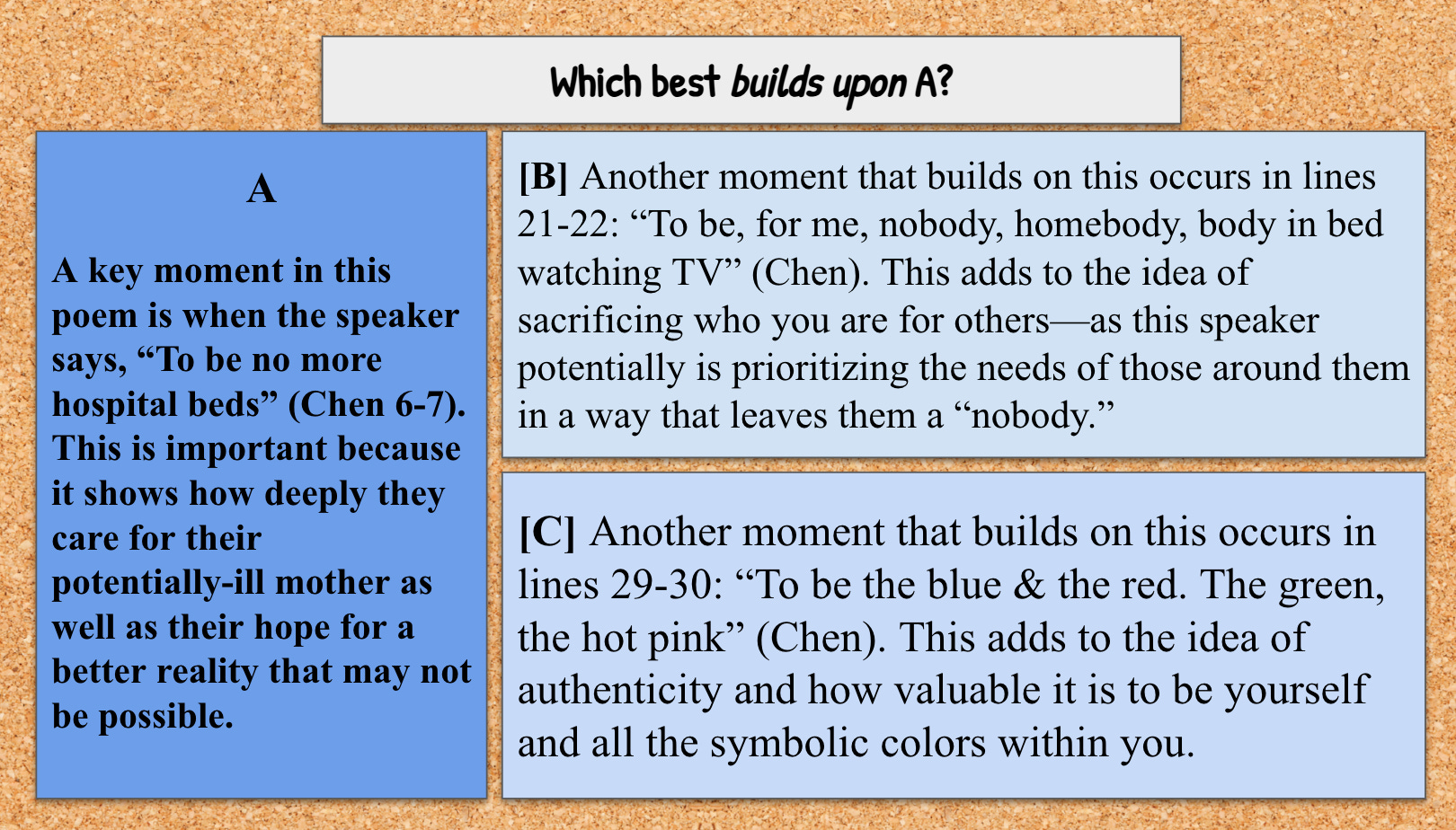
The easiest example to share builds on the previous section of this post, as it took place in the lesson immediately after our “key moment analysis” closing with sophomore English. Approximately 48 hours later, students stepped back into the classroom and the first thing they were tasked with doing was opening back up to what they had written to end the previous class.
On the board I had several different examples of “key moment analyses”—both individual and, as pictured above, potential sequences of analysis. In small groups, they discussed which of the samples were most effective, and then they read their own response from the previous lesson once more to give a quick “emoji” self-rating.
The benefits of this small adjustment: With the example above, this took five minutes (in a ninety-minute lesson!) but within those five minutes our learning from the previous class was reestablished so that students could situate themselves first in where they left off before we moved forward.
Admittedly, there is a case that for those who were absent the previous lesson this is a difficult way to begin upon returning, yet I also think it’s worth considering how this priority can help students get a glimpse of what they missed along with motivation to do the work of catching up when they can. (Also: this is a great space for me to check with previously-absent students to get them the support they need to make that “catching up” possible.)
⓷ Using Writing More Frequently To Capture Thinking
As John Warner has rightly observed and advocated a thousand times over at this point, writing is thinking—and there is immense, sustaining value in capturing and expanding our thinking through a meaningful writing process.
I worry that we frequently end up placing too much priority, though, on the output of writing in our current classrooms, contributing to an already-transactional culture.
(Which I fear the integration of AI now threatens to exacerbate even further.)
Concerned about this and very much still hesitant about the role of AI in the classroom as pressure builds to inundate our practices and classrooms with these tools, over the summer I wrote about an updated tool that I wanted to lean into instead in our classroom as part of a broader emphasis on more-frequent student writing.
A few weeks into this year? I have zero regrets about this priority.
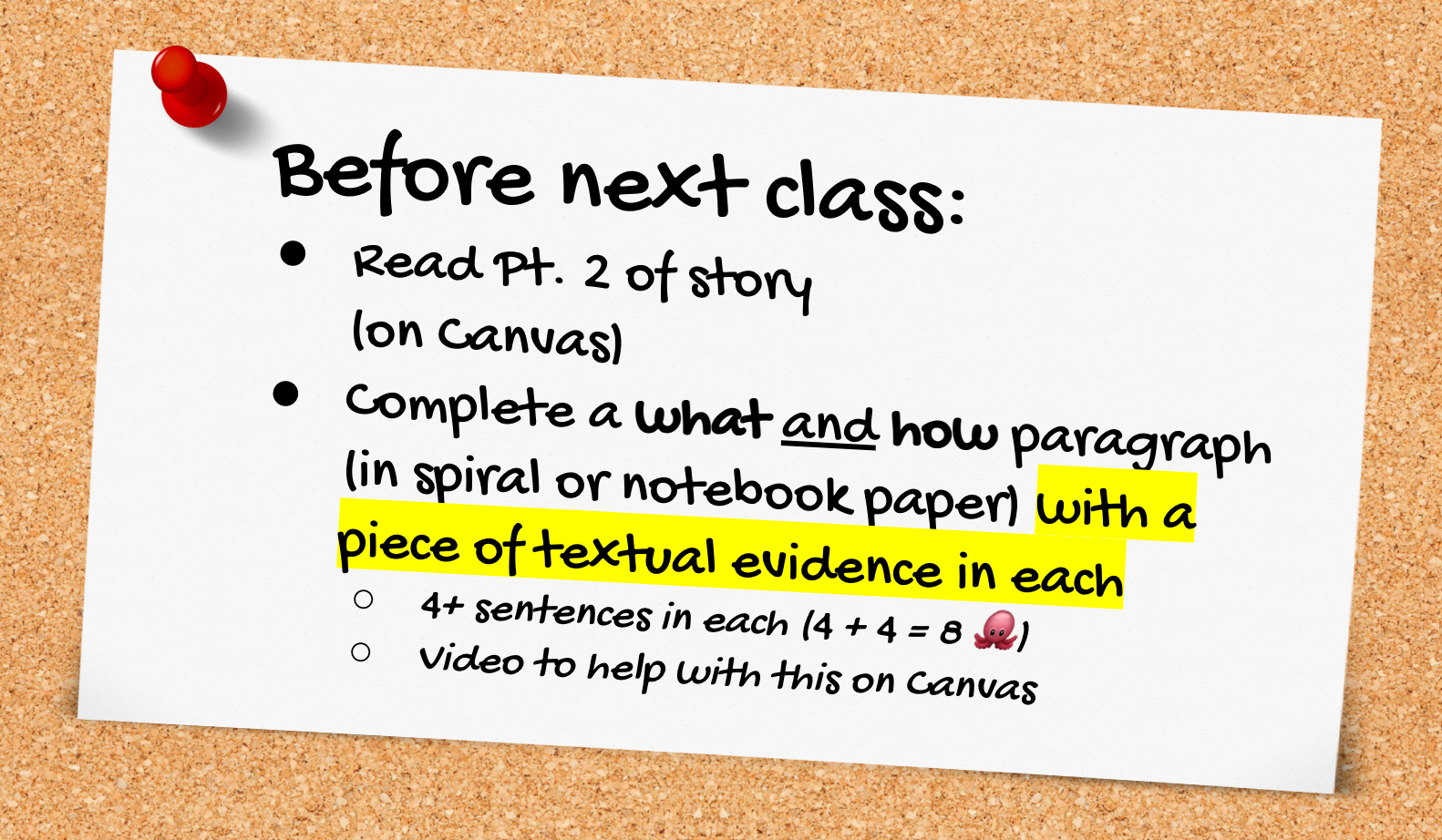
The benefits of this small adjustment: What I’m immediately noticing is that when students write at-length about a reading or topic—and often in their spiral notebooks by hand rather than typing on their Chromebooks—they are considerably more prepared to discuss their thinking with confidence and substance than they were in previous years when preparation was more driven by individual highlights and annotations of the text. And while going into the year I was worried about asking “too much” of students, students have consistently risen to this new standard so far.
Most importantly, I think? We have been able to arrive at this standard in our classroom consistently without getting mired in a transactional culture. Students are writing more but that doesn’t necessarily mean that I’m reading and grading more, too, which I’ll share more about in a final “small adjustment” I’ve made this year.
⓸ Whole-Class Guidance → Individual Follow-up’s
One way that I think we’ve successfully avoided “transactional culture” thus far despite an increase in the amount of writing I’m asking students to do daily?
By taking the post-assessment model of collective feedback that I’ve prioritized in recent years and bringing it into the classroom more regularly for guidance following formative practice.
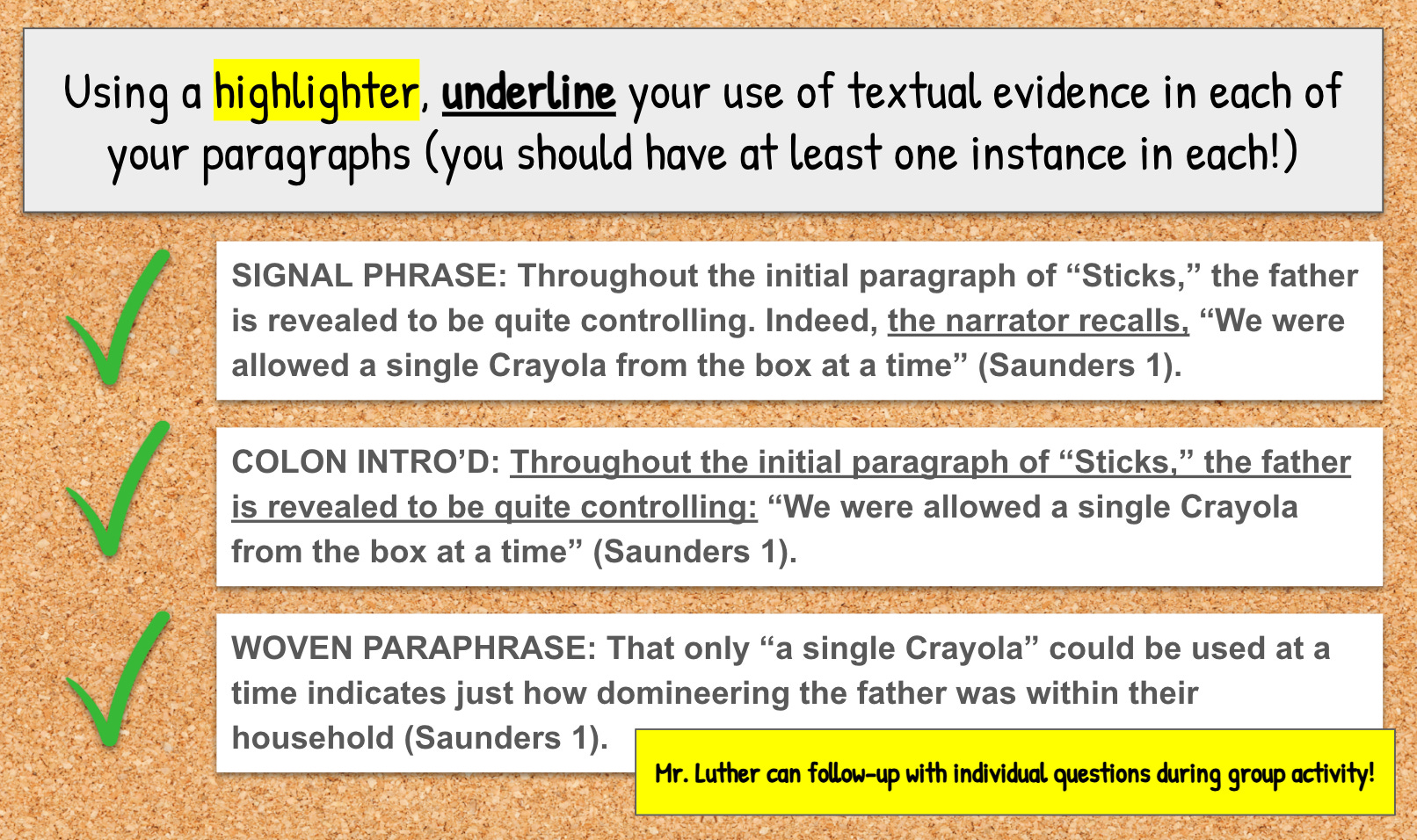
The example pictured above is a follow-up to students arriving with their “What-How” paragraphs with textual evidence, as it allowed me to then walk through what I would have been looking to give feedback on individually if I was collecting each of their writing samples.
After my guidance whole-class, students then completed their own self-check, following by an opportunity to ask for me to check theirs afterwards during a subsequent group activity.
The benefits of this small adjustment: by allowing students to take ownership of the feedback first through my guidance along with a checklist of what to look for, I believe it created a much “stickier” learning experience—far better than if they had relied 100% on my own individual feedback as a teacher.
As mentioned previously, this shift also has allowed me to find a more-manageable balance between the student writing I do read and give feedback to and others that students take more ownership of through self-reflection—a balance that I could not be more appreciative of in trying to be at my best self in the classroom and outside of it.
Your Turn: What Adjustments Have You Made This Year?
Of course, the paradox here is that there is really no such thing as a “small adjustment”—especially at the beginning of the school year, where the slightest of changes in trajectory for the classroom can have considerable impacts on where you end up.
(That applies to The Broken Copier, too, with a new project I’m hoping to share out in the next couple weeks!)
This is also where the value of an educator community comes into play, I’d add, when we can create a culture of sharing our own adjustments and reflections with each other and, in doing so, rippling that learning outward in exponential ways.
So if you’re willing, I’d encourage you to share a small adjustment of your own this year in the comments—along with reading and responding to others as we lean into the ever-growing community of teachers and educators here at The Broken Copier.
5 Things Worth Reading
Even while posting a bit less with The Broken Copier of late, I continue to learn so much from others who are sharing their own reflections and perspectives around education.
Therefore, the spirit of learning from one another as teachers and educators, I wanted to share five things I’ve read of late that have sparked my thinking and deepened my convictions in some sort of way:
“The Redress of Teaching” by Adrian Neibauer — An incredible reflection that left me jaw-agape several times throughout, and reminded yet again how much I love the opportunity it is to be a teacher. (Even in these challenging times!)
“An Existential Threat” by Jennifer Berkshire — Speaking of challenging times, my concerns about the state of education in our country deepen by day, and important pieces like this are a major reason for that.
“How Do You Want to Be Remembered?” by Audrey Watters — Audrey has been a must-read on all things AI for some time, but this piece cut through for me in challenging the “normalization” of AI in society.
“English Teacher Weekly for Sept. 19th” by Andrew Campbell — The bulk of this piece is a “This I Believe” essay by a student that will remind you, I think, why writing matters so much and, more importantly, why we should continue to find ways to elevate student voices.
“At my high school no one is talking about AI” by Sam Barber — Jane Rosenzweig’s project with The Important Work continues to uplift so many authentic voices around the topic of AI, and this post by a current HS student is maybe the best example yet of how much value that can add to the conversation.
Note: featured image for post from Pexels.com, taken by Stephen Niemeier
Thanks for the shoutout to The Important Work! Popping in here to extend an invitation to your readers to consider writing for us--all info here: https://theimportantwork.substack.com/p/call-for-proposals
I love your "raise your hand when you get this done so Mr. Luther can check" instruction. I'll add that to my student to-do list this week.
What a great way to show students you value their work, AND what a great way to ensure you are checking in with every student.
I hope kindergarten is going well for your little one :) Such a special time.