


Confession: I’m getting a bit bored with the AI conversation in education.
Not the notion of having the conversation, mind you, as I continue to believe it is needed—regardless of your perspective on it—and particularly needed in our secondary classrooms with students.
Instead, it is the how of these conversations amongst educators that I’m starting to lose interest in, as they seem to have increasingly taken on a ubiquity in much of their shape and scope.
Here’s why we need AI in our classrooms and schools for A, B, and C reasons.
No. We shouldn’t have AI in our classrooms and schools because X, Y, and Z.
But have you heard about A, B and C?
You’re not listening when I explain X, Y and Z!
I should note that almost all of these conversations and exchanges are well-intended and underlaid by sincere convictions. But again: I still find myself checking out a bit, with all the A’s and B’s as well as X’s and Y’s blending into each other at times as I scroll through yet another “exchange.”
The problem? With a district-wide curriculum change, that “conversation” was going to lend directly in our 10th grade classroom with an argumentative research unit around technology, robots and…you guessed it: artificial intelligence.
Our initial week of conversation went surprisingly well, though. Students then went on to read their articles and compile their own research and write their essays—but due to being a bit ahead of the pace I had anticipated, we had a three-lesson stretch of class remaining before Spring Break.
So I decided to try something completely new: having students read a couple science fiction stories aligned with our essential questions around AI and technology and then engage in a formal seminar conversation to conclude the week.
(My other goal: zero need for computers or even spiral notebooks, which I had just collected to review. In fact, students basically lived off this single worksheet across the three-lesson sequence.)
Looking back, I have to be honest: this surpassed all of my expectations.
Seriously: this was one of my favorite weeks of the year so far with my 10th graders—not just because of the success of the individual lessons but more importantly because of the way it offered an entirely new (and better!) entry point into the AI conversation in our classroom.
This is what motivated today’s post: [1] a lesson-by-lesson overview of this “Sci-Fi sequence” that went so well in our classroom, [2] the resources we used across these lessons (including the “prep sheet” linked below) and [3] what I’m taking away after this very-fun and, I’d argue, very-important week in our classroom.

Lesson 1: Tilly Norwood and a Story About…Yogurt!
The goal of this lesson was to start the week off with a lot of conversation—and some fun! Given that students had just spent several weeks navigating relatively-dense articles and research around AI for their own essays, I wanted this lesson to feel very different.
We watched the beginning of this 100%-AI-generated video starring the recently-famous (and infamous?) Tilly Norwood, with some lyrics that were, well, a bit on the nose:
“When they talk about me / They don’t see / The human spark / The creativity.”
While the song itself didn’t generate the best reviews, it made for a great opening to our week—including this discussion question:
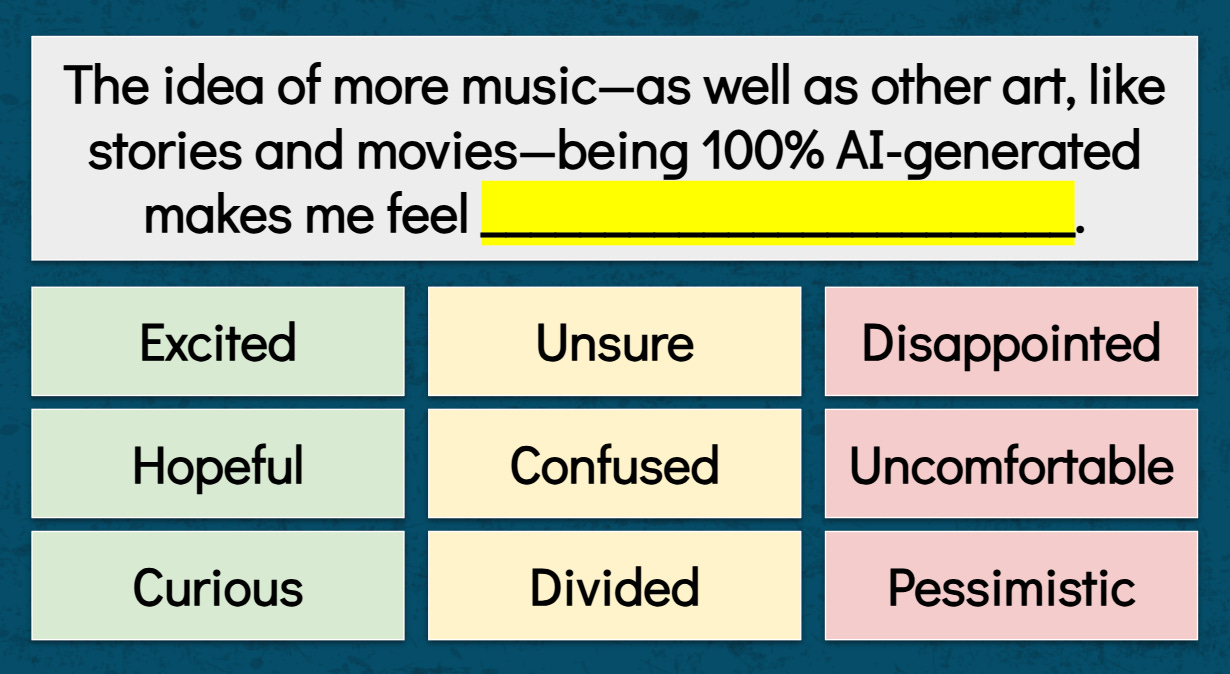
We were off! There certainly were a lot of students quite put-off by the video and the idea of AI-generated art more broadly—but many also had to reconcile this reaction with the positives they had found and written about in their research.
Which made it a perfect moment to pivot to this very-short story by John Scalzi: “When the Yogurt Took Over”
I don’t want to spoil it for you (more than the title does!) but let’s just say that it is quite the story to situate within a week of talking about AI and technology. Students found themselves oscillating between varying positions as the story progressed and they got past the story’s surface-level ridiculousness and into its deeper insights:
“SORRY, WE DON’T ADVISE ANYMORE, the yogurt said. IF YOU WANT OUR HELP YOU HAVE TO GIVE US CONTROL.”
The goal of these initial lessons was to spur thinking that students could capture in writing to prepare for an end-of-week seminar—so I found myself cutting off discussion at points and encouraging students to instead jot down their reactions and perspectives!
“But Mr. Luther,” one student objected near the end of this first lesson. “I really think the yogurt should take over!”
This is when I played the ending of the Tilly Norwood video for them once more before the bell rang:
“It’s the next evolution can’t you see?
AI’s not the enemy—it’s the key.”
Students once again cringed, but this time it was with a bit more hesitation and understanding of how all the pieces might actually fit together more than they initially thought.
The bell rang. We were going somewhere.
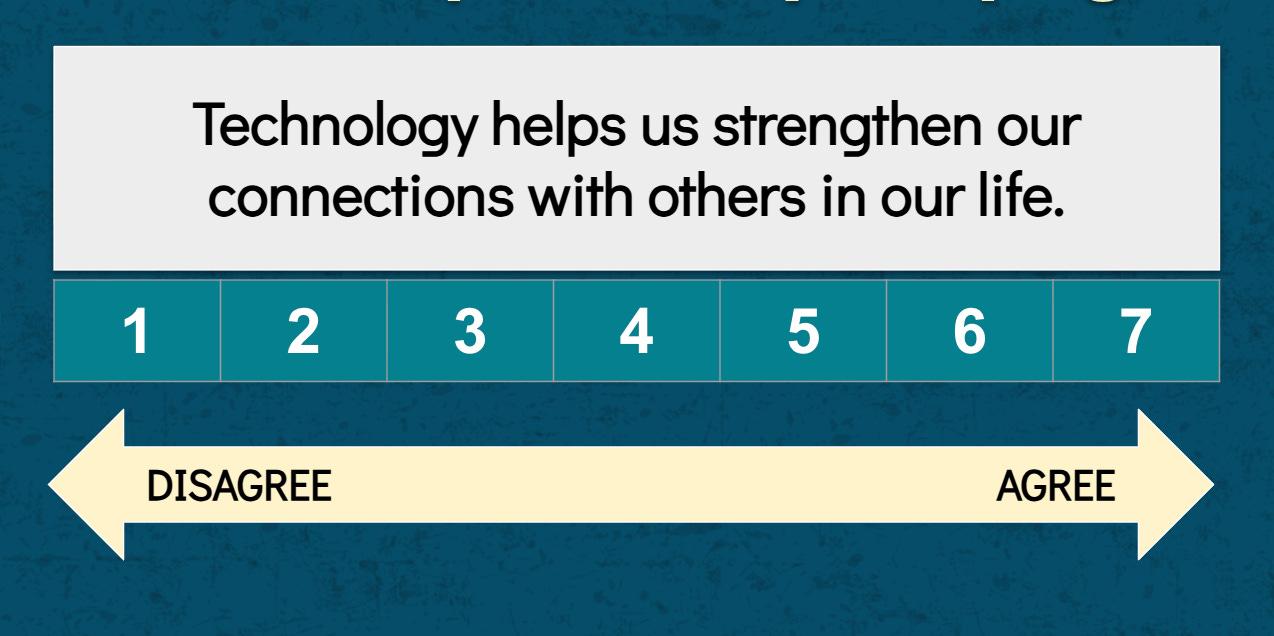
Lesson 2: a Story About Technology and Connection
Whereas the opening lesson of this sequence was definitely “big picture” with more of a fun/splashy vibe, our second lesson pivoted to more of a personal focus: how AI and technology impact the way we stay connected to one another.
This was our opening question and discussion, along with centering one of our classroom core beliefs: “We value perspective by prioritizing the values of empathy and reflection across our learning.”
Aligned with this value in our classroom is the story of the blindfolded men and the elephant, with the two-fold reminder that [a] our individual perspectives are inevitably linked with our individual experiences and therefore [b] we need to hear from those who have gone through different experiences along with sharing our own in order to “see the whole elephant.”
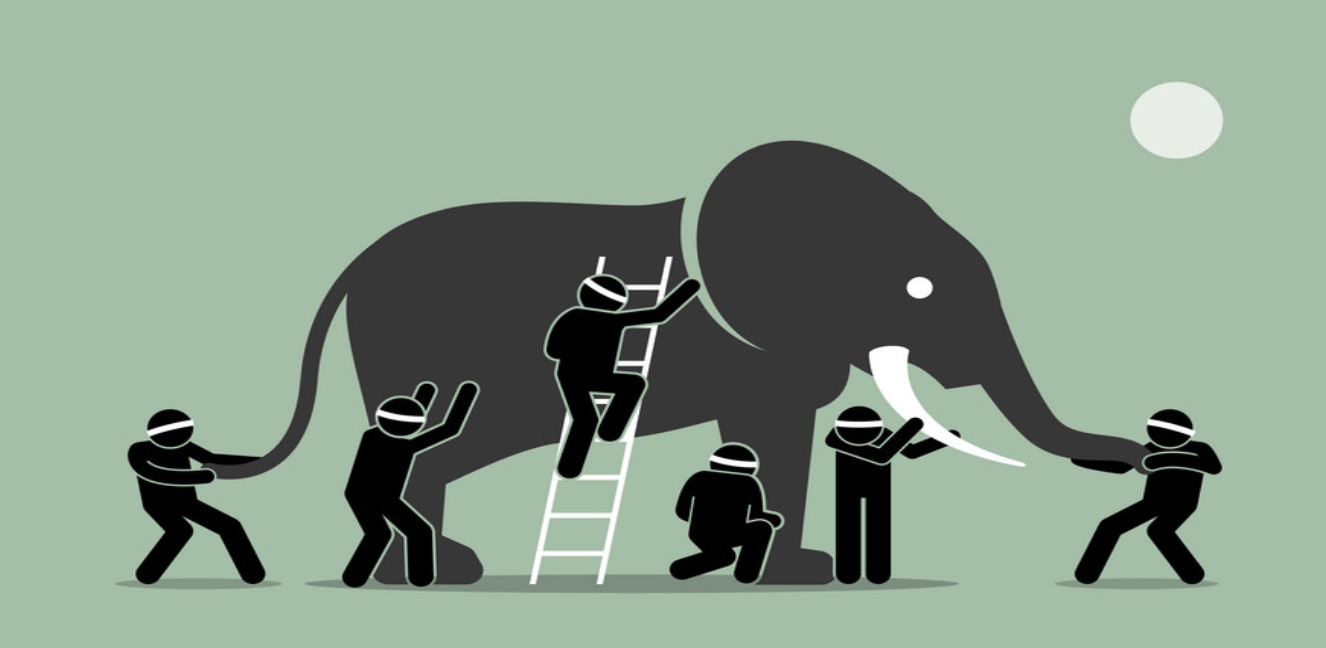
To reiterate this, I shared my own experience from teaching online briefly during the onset of the COVID-19 pandemic.
As was the case for many of us, some students very much disconnected in a Zoom learning context that was 100% shaped around technology; however, there were other students who came to life, especially in the chat box, with a level of engagement and confidence that unfortunately faded in many cases once we were back in-person.
Different lived experiences, different perspectives. Both important.
From there, we moved into a remarkable, unforgettable short story by the remarkable, unforgettable Ken Liu: “Presence”
Given that it’s a bit of a longer story, I’ll give a brief recap:
Told in the 2nd-person point-of-view (!!!), you are immediately placed in the perspective of an immigrant using a new technology to communicate from America via robot with your ailing mother—who is in a hospital room in your home country.
While at first “you” are reluctant in using this new technology—which allows you to awkwardly complete some caretaking tasks, such as trimming your mother’s nails!—like so often with technology it becomes something you get quite used to.
The story very much ends up being about not only whether this technology is good but, more poignantly, who this technology is really for?
You think about absolution that will never come because the judge is yourself.
As is the case of so much of Ken Liu’s writing, a story that on the surface is about technology really becomes a story about so much else—and really everything other than technology.
(Which, I think, is a good lesson to learn with our conversations about AI.)
We ended the story by asking everyone to ascribe one word to how they feel about the main character of the story: the son who used the technology to communicate and interact with his ailing mother from afar.
Their answers?
Empathy. Frustration. Confusion. Disappointment. Compassion. Hope.
“Remember the elephant?” I ask.
Just like our first lesson, we shifted to written reflection in order to set ourselves up for the third lesson’s seminar—but the feeling in the room was quite different at this point.
Leaving me quite intrigued about what a full seminar would result in…
Lesson 3: a Whole-Class Seminar on All of the Above
The way I try to design seminars for my sophomore English classes is pretty straightforward: [1] students capture their thinking in writing beforehand, knowing the general topics in advance so they can prepare for them; [2] we have “warm-up” questions to get the ball rolling with whirl-around single-word shares and shoulder partner chats; and [3] we then launch into the open conversation, with students jumping in and responding to one another while I mostly just listen and take notes.
This seminar was no different, with students getting a chance to prepare beforehand using the worksheet we had been completing across the previous lesson—along with the added reflections after they received feedback on their research essays.
This is the moment, I realized, as the alarm went off to signal that it was time to begin the first seminar. And I have zero clue how it will go.
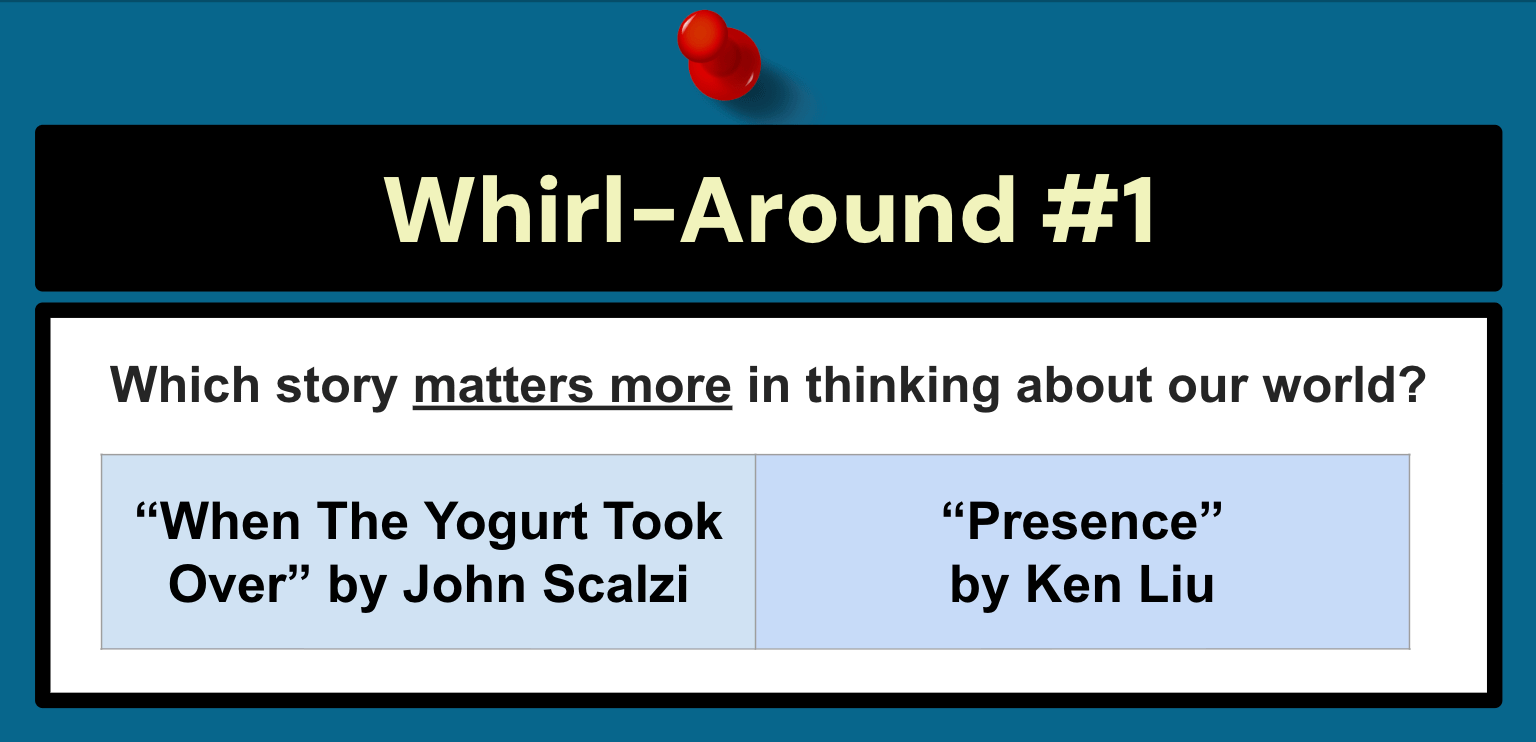
"Okay everyone,” I said, breaking the silence that had filled the room as they prepared their notes. “Which story matters more in thinking about our world?”
They went around one at a time: “Yogurt.” “Yogurt.” “Presence.” “Yogurt.” Etc.
With shoulder partners, they quietly chatted about their reasoning, almost like a form of “seminar stretching” as we tiptoed towards the main event.
“Okay, let’s talk about the stories. Why did you think they were important?”
All I’ll say here: even days after we had read the stories, students had a lot to say. Not just about the stories themselves, but why they mattered in today’s moment and going forward.
They then had even more to say about their research, and what stood out to them across their reading and writing about this topic over the previous weeks.
And then finally this question: will AI and other forms of technology have a positive impact on society—now and going forward?
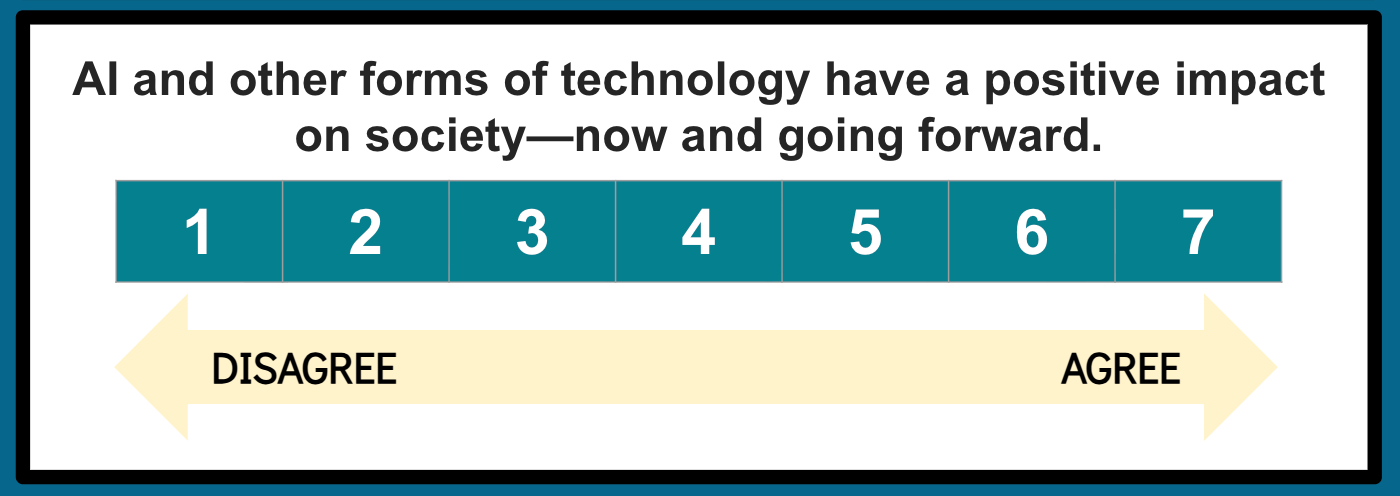
Six weeks before, we had began the unit with this exact question—and here we were once again. This time, though? It wasn’t that the answers changed as much as the confidence and substance of the answers.
The biggest surprise for me: students who had started the unit with relatively-straightforward, quite-confident opinions (“AI is an incredible thing because A, B and C!” and “AI is terrible because X, Y and C!”) began to name and discuss the counterpoints to their earlier positions. It wasn’t that they had changed their minds; rather it was that the certainty they had held in either direction had softened to create space for curiosity and humility.
This was a result of the work they did with their research, yes, but I read those essay conclusions that were more often than not filled with ample certainty—and I believe the real shift took place as a result of two things: [1] considering the essential questions through the lens of science fiction and [2] engaging in authentic, extended conversations with peers.
The bell rang and Spring Break began and I could not stop thinking about how cool this week was—and the potential lesson it might offer to all of us going forward.
Reflection: So What Did I Take Away From This?
Along with the needed reminder that you can talk meaningfully about AI in the classroom without actually bringing AI into the classroom for students to use, there were three other takeaways that I took away from these lessons:
AI Literacy needs to be more than just skill development. Too often it feels like this urgency for AI Literacy skips past (intentionally?) the messiness of bigger conversations about what it is actually for, broader impacts and potential harm, and all the questions and complications swirling around its expanding impact on society.
Student views on AI are just as messy as adult views on AI. By no means were students in lockstep in their views. As mentioned in the video above, I mostly avoided keeping track of how students responded to individual questions and tried to abide more in the “vibe,” you could say. And the vibe was messy.
The conversations were the point. I found myself, class period after class period, coming back to a simple appreciation for the conversations that took place. How students spoke up, considered and reconsidered, and listened to one another. (Something we adults can take a lesson from, right?)
I don’t for a second pretend to know which direction we ought to head in with AI as teachers and educators, but I do believe—perhaps more strongly than ever—that any direction that skips past honest, ambitious conversations with students is beneath what they are capable of.
And deserve.

Recommendations
Here are three things I read this week (that have nothing to do with AI!) that stuck with me in one way or another, so I figured I’d forward them onward:
“Old Dog, Old Tricks” by Kate Roberts, which lays out the case for not getting swept up in the newest trend in a way that causes us to lose sight of what really matters.
“Cultivating Analysis in Middle School Writing” by Anne Sulsky, a detailed, thoughtful piece that goes into the weeds (in the best of ways) of supporting student writing that goes beyond the typical constraints we often confine them to in our education system.
“Poetry is not just for April!” by Brett Vogelsinger, in which he makes the case for poetry “as an all-seasons genre.” If you read his book Poetry Pauses, this post should be familiar territory that Brett has thoughtfully shaped out for so many of us: the idea that poems can enrich and uplift so many aspects of our teaching when we lean into their true potential.
Oh, and speaking of Brett? We are going to be co-facilitating a slow-read of Bleak House by Charles Dickens starting April 12th, with the first discussion taking place the following Sunday (April 19th). This is a quite-hefty text, so we’ll be tackling this one week and conversation at a time all the way through August! If you’d like to join in, leave a comment or send me an email for more details.
Finally, if you’re a Broken Copier reader in Georgia or the surrounding states, I’m excited to announce that I’ll be heading down that way at the end of July! I cannot wait to be a part of the Humans First: Adolescent Education in the Age of AI Conference, a three-day event that is designed in a way that actually can “walk the walk” of humility and discourse—which we desperately need more of, I’d say.
(If you’re in the area and looking for what is shaping up to be a really meaningful experience, sign-up information is at the link!)
Wonderful! Thank you for sharing your planning and resources and thinking behind it all. Long before AI when I taught high school I would do “The Veldt” and “There Will Come Soft Rains” by Ray Bradbury and other nonfiction pieces for a “technology” unit! It went even better with F451. Will add these to my resources as well. Thank you!
Practical resources I will definitely use as we wrap up a unit on AI and Frankenstein. Thank you, it feels like the wilderness. It’s messy out here too. I get some comfort thinking about how messy it was 200 years ago during Mary Shelley’s time as well.